

Economics
Australia Manufacturing PMI Reaches 52.0 in July, Indicating Output Growth
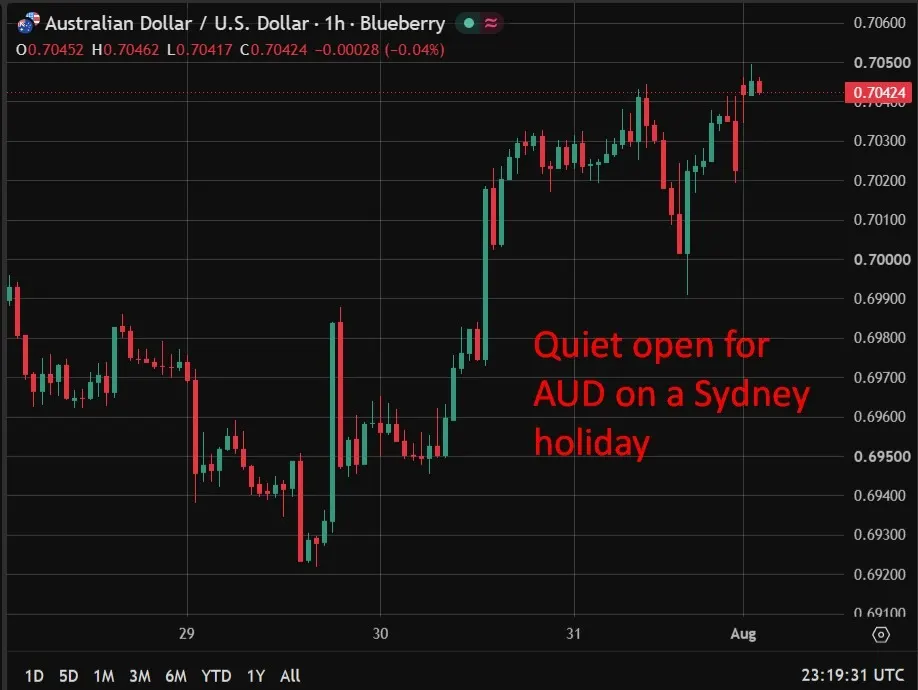
The S&P Global Australia Manufacturing Purchasing Managers' Index (PMI) rose to 52.0 in July, indicating a return to growth in production and new orders for the first time in several months. Despite this positive development, the recovery remains fragile due to elevated input costs linked to the Middle East conflict.
The latest S&P Global survey reveals a modest recovery in the Australian manufacturing sector amidst ongoing inflationary pressures.
Executive summary
The S&P Global Australia Manufacturing Purchasing Managers' Index (PMI) rose to 52.0 in July, indicating a return to growth in production and new orders for the first time in several months. Despite this positive development, the recovery remains fragile due to elevated input costs linked to the Middle East conflict.
The S&P Global Australia Manufacturing PMI increased to 52.0 in July from 51.5 in June, marking the fourth consecutive month above the neutral 50.0 threshold and the strongest reading since January. This rise reflects a modest improvement in manufacturing conditions, with production and new orders both returning to growth for the first time in six months.
Employment in the sector also saw a notable increase, with staffing levels rising at the fastest pace since January, although some of this hiring was temporary. However, the recovery is tempered by ongoing challenges, including a decline in new export orders, which fell again due to rising prices and competition.
Input price inflation eased to its lowest level since February, but remains elevated, with 40% of firms reporting higher costs primarily driven by fuel and shipping expenses linked to the Middle East conflict. This persistent inflationary pressure poses risks for future producer price inflation readings, which the Reserve Bank of Australia will monitor closely.
Andrew Harker, Economics Director at S&P Global Market Intelligence, noted that while the increases in output and new orders provide some reassurance, the recovery is tentative and could be short-lived if inflationary pressures re-emerge. Manufacturers expressed cautious optimism regarding their production outlook, with plans for capacity expansions continuing, albeit still below pre-conflict levels.
Institutional framing
TradingBase presents market updates in an institutional financial-news format. This is not investment advice.
Market watch
Track the economic calendar at Economic Calendar, price action at Markets, and signals at Signals.
NIC · Impact scores
Global: 48 · Market: 45 · Urgency: 50 · Confidence: 90 · Bullish
Themes: inflation
Asset impact
- US Stocks — Bullish (67) · US Stocks leans bullish based on headline/body drivers.
- Indices — Bullish (67) · Indices leans bullish based on headline/body drivers.
Market reaction
- SPX: Price snapshot pending · T-15m / T0 / T+15m / T+60m
- US30: Price snapshot pending · T-15m / T0 / T+15m / T+60m
Trading insight
Analysis only. Not a trade signal. Not investment advice. No Entry/TP/SL is generated by NIC.
Scenarios
- Continuation if confirmation holds after the news window.
- Whipsaw risk is elevated inside the first 15–60 minutes after release.
- Watch correlated assets for confirmation rather than reacting to the headline alone.
Watch factors
- Actual vs forecast surprise (priced-in risk)
- USD / yields impulse if macro-sensitive
- Liquidity and spread during the news window
- Follow-through after T+15m / T+60m
- Relative reaction in us_stocks
- Relative reaction in indices
Related events
Related knowledge
Fed's Logan Advocates for Rate Hike Amid Persistent Inflation Concerns
Related news correlation
U.S. Q2 Employment Cost Index Rises 0.9%, Exceeding Expectations
Related news correlation
Fed Officials Kashkari and Hammack Discuss Recent Dissent on Rate Hike
Related news correlation
ECB's Kocher Emphasizes Data-Driven Policy Amid Geopolitical Risks
Related news correlation
Euro Area Inflation Rises in July, Increasing Pressure on ECB
Related news correlation
TradingBase Library
Research depth for related concepts
Ask AI about this article
Answers are grounded in the published article “Australia Manufacturing PMI Reaches 52.0 in July, Indicating Output Growth” and NIC scores — no invented figures.