

Science
NASA’s Roman Space Telescope Launches to Explore Cosmic Mysteries
NASA's Roman Space Telescope has launched on a mission to uncover the universe's secrets, traveling one million miles to the second Sun-Earth Lagrange point (L2). With capabilities to survey the cosmos at speeds 1,000 times faster than the Hubble Space Telescope, it aims to gather 1.4 terabytes of data daily.
The telescope embarks on a journey to L2 to investigate dark matter, dark energy, and exoplanets.
Executive summary
NASA's Roman Space Telescope has launched on a mission to uncover the universe's secrets, traveling one million miles to the second Sun-Earth Lagrange point (L2). With capabilities to survey the cosmos at speeds 1,000 times faster than the Hubble Space Telescope, it aims to gather 1.4 terabytes of data daily.
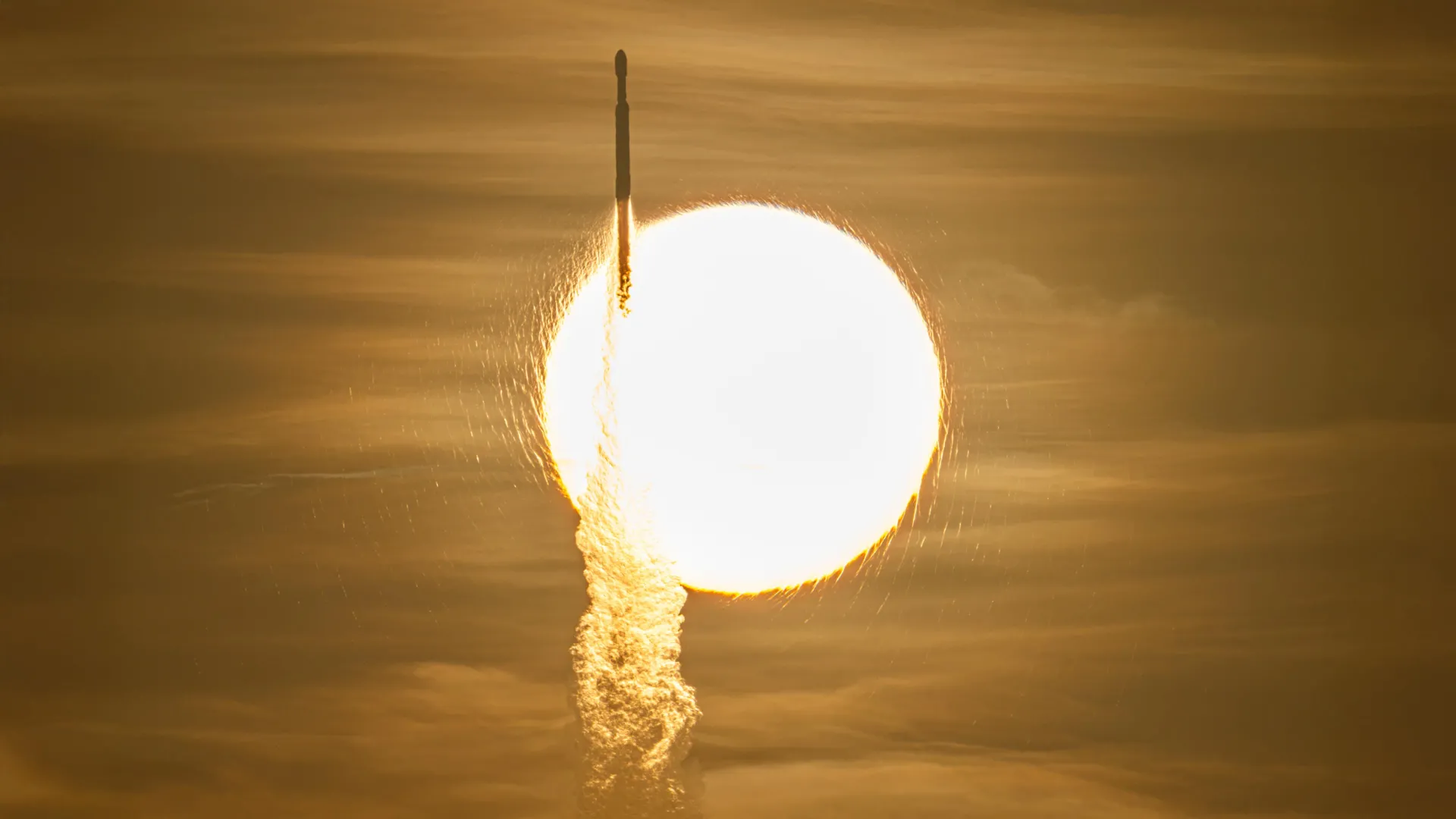
NASA's Nancy Grace Roman Space Telescope lifted off on August 30, 2026, at 7:26 a.m. EDT from Launch Complex 39A at NASA's Kennedy Space Center in Florida. The telescope is set to travel approximately one million miles to its operational orbit at L2, a stable point in space where gravitational forces from the Earth and Sun balance.
Once operational, the Roman Space Telescope will utilize its sharp infrared vision and wide field of view to conduct extensive surveys of the universe. Its primary objectives include studying dark matter, dark energy, and exoplanets, while also facilitating discoveries beyond these key areas.
NASA Administrator Jared Isaacman highlighted the mission's success, noting it was delivered ahead of schedule and on budget, reflecting over a decade of effort from NASA and its industry partners. Nicky Fox, associate administrator for the Science Mission Directorate at NASA, emphasized that the telescope will enhance humanity's understanding of cosmic history and the search for life beyond our solar system.
Following its launch, controllers at NASA's Goddard Space Flight Center began receiving telemetry from the telescope just seven minutes after liftoff. The Falcon Heavy rocket successfully separated from the observatory 31 minutes post-launch, with the two boosters returning safely to the launch site for refurbishment.
The Roman Space Telescope is expected to communicate with controllers using the Near Space Network initially, transitioning to NASA's Deep Space Network approximately 70 minutes after launch to guide it toward L2. This mission is anticipated to usher in a new era of astronomical discovery, making previously invisible cosmic phenomena observable.
Institutional framing
TradingBase presents market updates in an institutional financial-news format. This is not investment advice.
NIC · Impact scores
Global: 40 · Market: 35 · Urgency: 35 · Confidence: 80 · Neutral
Themes: rates, geopolitics, energy
Related knowledge
Ask AI about this article
Answers are grounded in the published article “NASA’s Roman Space Telescope Launches to Explore Cosmic Mysteries” and NIC scores — no invented figures.