
Economics
Bank of Japan Minutes Reveal Concerns Over Inflation Risks
Minutes from the Bank of Japan's June meeting indicate a growing concern among board members regarding inflation risks, with some advocating for a faster pace of interest rate hikes. The discussions suggest that the central bank is increasingly focused on structural inflation pressures as it prepares for potential policy adjustments in September.
Debate on Rate Hikes Intensifies as Price Pressures Broaden
Entities & knowledge links
Executive summary
Minutes from the Bank of Japan's June meeting indicate a growing concern among board members regarding inflation risks, with some advocating for a faster pace of interest rate hikes. The discussions suggest that the central bank is increasingly focused on structural inflation pressures as it prepares for potential policy adjustments in September.
The Bank of Japan (BOJ) minutes from the June 15-16 meeting, released on Wednesday, highlight a significant shift in the board's stance towards inflation risks. The Policy Board voted 7-1 to raise the policy rate by 0.25 percentage points to around 1.0%, marking a 31-year high. Notably, dissenting member Asada Toichiro argued that the risks to production and employment outweighed those related to inflation.
The minutes reveal that several board members were already advocating for a more aggressive approach to rate hikes, suggesting that the central bank's reaction function has become more hawkish than the 7-1 vote might imply. Some members expressed concerns that consumer inflation could see a substantial increase in the latter half of the fiscal year, driven by firms planning widespread price hikes.
One member cautioned that inflationary pressures might persist even if geopolitical tensions, such as the Middle East conflict, were to ease, citing rising shipping and storage costs associated with alternative supply sourcing. This perspective indicates that the board perceives current price pressures as having a structural component, rather than being solely a temporary consequence of geopolitical events.
Additionally, two board members called for a more rapid increase in rates to align the policy rate closer to levels considered neutral for the economy. Most members acknowledged that the transmission of high oil prices into business-to-business transactions has progressed swiftly, raising concerns about a potential spillover into consumer prices.
The board also voted 7-1 to maintain its current pace of reducing Japanese government bond purchases through January-March 2027, with plans to halt tapering from April 2027 and maintain monthly purchases at approximately 2 trillion yen. Dissenting member Tamura Naoki advocated for a continuation of the tapering process at the existing pace through January-March 2028.
At the subsequent July meeting, the BOJ opted to keep rates steady but indicated that future discussions would focus on upside price risks, suggesting that a rate hike could be on the table as early as September. The minutes from the June meeting underscore that the recent rate increase was not viewed as a conclusive solution to the inflation debate, but rather as a step in an ongoing process to address broadening price pressures in the Japanese economy.
Market impact
This article presents verified public information. Price reaction depends on liquidity and what was already priced in — no directional call is made here.
Institutional framing
TradingBase presents market updates in an institutional financial-news format. This is not investment advice.
Market watch
Track the economic calendar at Economic Calendar, price action at Markets, and signals at Signals.
NIC · Impact scores
Global: 97 · Market: 100 · Urgency: 53 · Confidence: 90 · Bullish
Themes: inflation, rates, geopolitics, energy
Asset impact
- Oil — Bullish (67) · Oil leans bullish based on headline/body drivers.
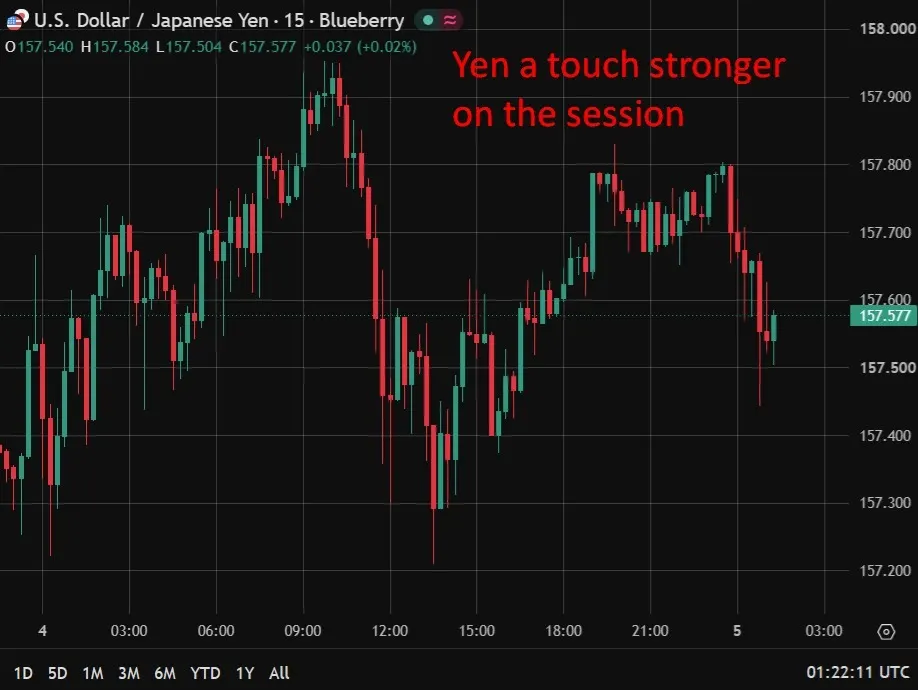
- JPY — Bullish (67) · JPY leans bullish based on headline/body drivers.
- Bonds — Bearish (67) · Bonds leans bearish based on headline/body drivers.
- Commodities — Bullish (67) · Commodities leans bullish based on headline/body drivers.
- Forex — Bullish (67) · Forex leans bullish based on headline/body drivers.
Market reaction
- USOIL: Price snapshot pending · T-15m / T0 / T+15m / T+60m
- USDJPY: Price snapshot pending · T-15m / T0 / T+15m / T+60m
- US10Y: Price snapshot pending · T-15m / T0 / T+15m / T+60m
- DJP: Price snapshot pending · T-15m / T0 / T+15m / T+60m
- FX: Price snapshot pending · T-15m / T0 / T+15m / T+60m
Trading insight
Analysis only. Not a trade signal. Not investment advice. No Entry/TP/SL is generated by NIC.
Scenarios
- Continuation if confirmation holds after the news window.
- Whipsaw risk is elevated inside the first 15–60 minutes after release.
- Watch correlated assets for confirmation rather than reacting to the headline alone.
Watch factors
- Actual vs forecast surprise (priced-in risk)
- USD / yields impulse if macro-sensitive
- Liquidity and spread during the news window
- Follow-through after T+15m / T+60m
- Relative reaction in oil
- Relative reaction in jpy
- Relative reaction in bonds
- Relative reaction in commodities
Related events
Related knowledge
Japan Real Wages Rise for Sixth Consecutive Month, Bolstering Case for Future BoJ Rate Hikes
Related news correlation
Japan Services PMI: Growth Slows in July Amid Rising Prices
Related news correlation
Bank of Japan Raises Interest Rate to 1.0% Amid Inflation Concerns
Related news correlation
US Treasury Secretary Bessent Comments on Yen and Bank of Japan Policy
Related news correlation
Fed's Paulson: Monetary Policy Decisions Are Clear-Cut
Related news correlation
CPI
Matched terminology in article
Library
Research depth for related concepts
Ask AI about this article
Answers are grounded in the published article “Bank of Japan Minutes Reveal Concerns Over Inflation Risks” and NIC scores — no invented figures.